How to Choose Herbal Tea: Types, Benefits & Best Uses
Have you ever stood in front of a shelf full of herbal tea and wondered which one you should actually buy? With dozens of boxes, unfamiliar herbs, colourful blends, and different claims on every package, choosing the right herbal tea can feel more confusing than it should.
The good news is that you do not need to know everything about herbs to make a better choice. How to choose herbal tea starts with one simple question: What do you want from your tea? Your answer can help narrow down the many options and make it easier to find a blend that fits your needs and daily routine.
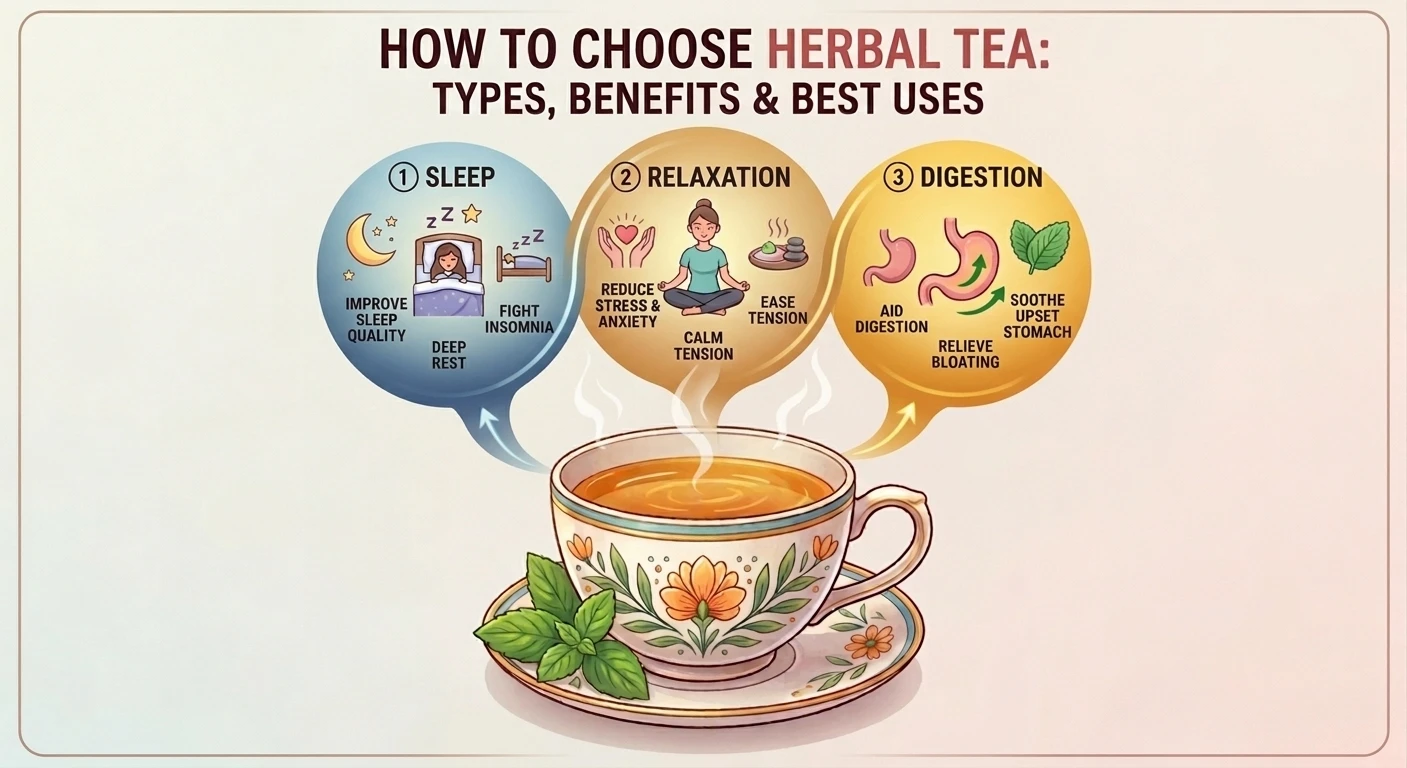
For example, you may be looking for an herbal tea for sleep and relaxation to enjoy as part of your evening routine. You might want a herbal tea for digestion after a meal. Or perhaps you simply want a naturally caffeine-free drink that you can enjoy in the evening without choosing traditional tea or coffee.
Understanding the main types of herbal tea can also help you shop with more confidence. Chamomile, peppermint, ginger, lemon balm, and hibiscus are just a few popular options. Each herb has its own flavor, traditional uses, and characteristics. Some blends contain a single herb while others combine several ingredients to create a specific taste or purpose.
In this beginner-friendly guide, you will learn:
- The main types of herbal tea and what makes each one different
- How to choose herbal tea based on the benefit or purpose you want
- Which herbal teas are commonly chosen for sleep and relaxation
- Which herbs are traditionally used for digestion
- The best caffeine-free herbal tea options beyond basic choices
- How to read herbal tea ingredients before buying
- Common mistakes people make when choosing herbal tea blends
- How to choose a herbal tea that fits your taste and daily routine
By the end, you will have a clearer way to compare herbal teas and choose an option that makes sense for you.
Key Takeaways
- How to choose herbal tea comes down to matching the plant to your goal, not just picking a flavor you like.
- Flower-based teas like chamomile and lavender lean toward relaxation, leaf-based teas like peppermint and lemon balm lean toward digestion and daytime calm, and root-based teas like ginger and licorice lean toward digestive and immune support.
- Chamomile, valerian root, and passionflower are the most commonly recommended herbal teas for sleep.
- Peppermint and ginger are the most commonly recommended herbal teas for digestion.
- Almost all herbal tea is naturally caffeine-free, with a few notable exceptions like yerba mate and guayusa.
What Is Herbal Tea?
Herbal tea is defined as an infusion made from the leaves, flowers, roots, seeds or bark of a non-tea plant. It can be brewed in hot or cold water. Since it does not contain leaves from the Camellia sinensis plant, true herbal tea is naturally caffeine-free. This is one of the main reasons people search for how to choose herbal tea.
The word “herbal” covers an enormous range of plants, which is exactly why choosing one feels overwhelming. Common ingredients include flowers like chamomile, lavender, and hibiscus, leaves like peppermint, rooibos, and lemon balm, and roots like ginger, licorice, and turmeric. Each plant part behaves differently in both flavor and function, which is the foundation for choosing well.
Types of Herbal Tea and Their Benefits
What are the main types of herbal tea? Herbal tea generally falls into three categories based on which part of the plant is used: flower teas, leaf teas, and root teas, and each category tends to share similar effects.
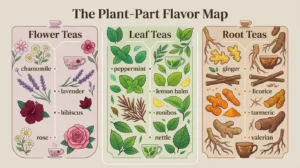
The Plant-Part Flavor Map™
This is an original framework created for this guide to simplify how to choose herbal tea by plant part instead of memorizing dozens of individual names:
- Flower teas (chamomile, lavender, hibiscus, rose) — Delicate, aromatic, steep quickly, and tend toward relaxation or antioxidant support.
- Leaf teas (peppermint, lemon balm, rooibos, nettle) — Light to medium body, steep 5 to 7 minutes, and tend toward digestion or gentle daytime calm.
- Root teas (ginger, licorice, turmeric, valerian) — Bold, earthy, often simmered rather than steeped, and tend toward digestive or immune support.
Popular Herbal Tea Varieties at a Glance
- Chamomile
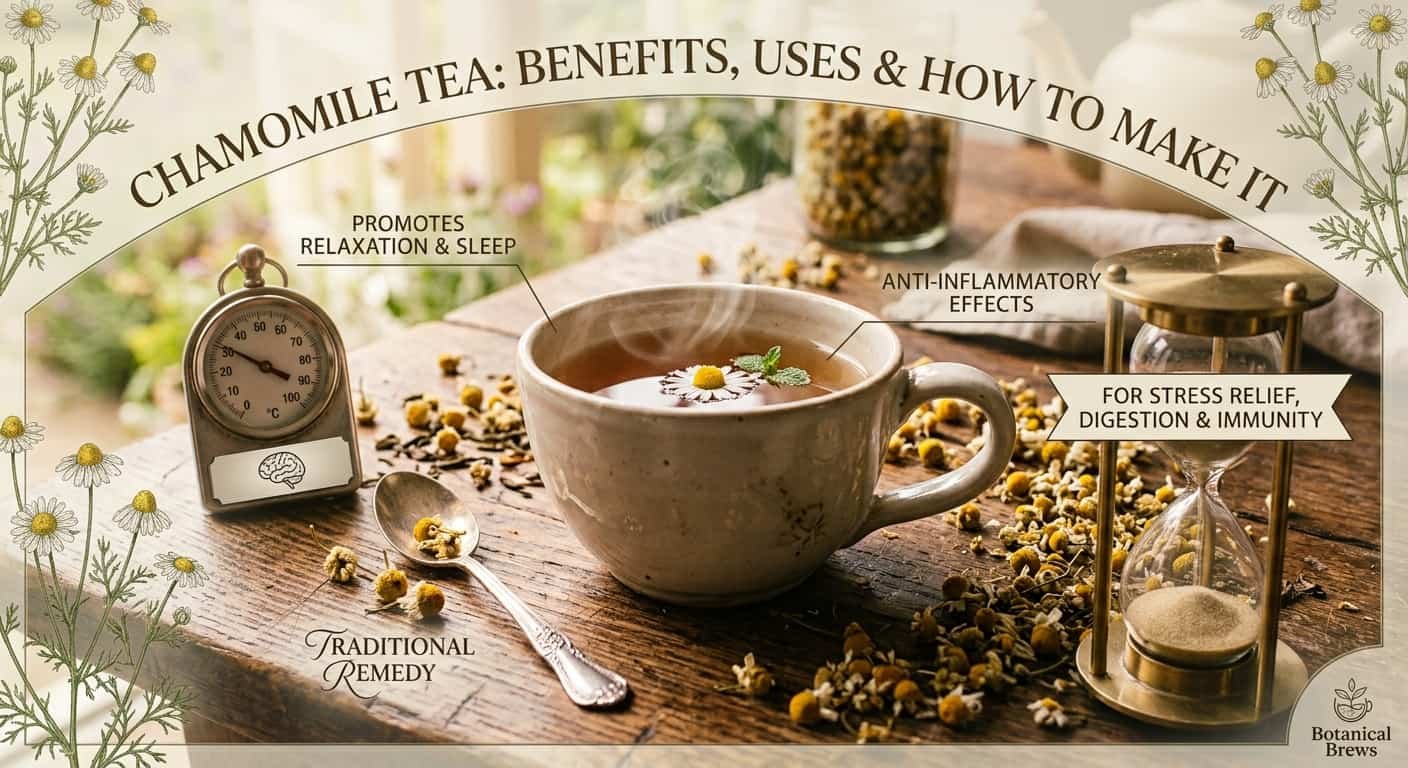
Chamomile is one of the most popular herbal teas for people looking for a calming drink in the evening. It has a mild floral flavor with a slightly sweet, apple-like taste. Chamomile tea is traditionally used for relaxation and as part of a bedtime routine. It is naturally caffeine-free, making it a popular choice for people who want a warm drink before sleep without caffeine.
- Peppermint
Peppermint tea is known for its refreshing aroma and naturally cooling flavor. It is made from peppermint leaves and is often enjoyed after meals. Traditionally, peppermint has been used to support comfortable digestion and ease occasional feelings of bloating or stomach discomfort. Its strong minty taste also makes it a good option for people who prefer a refreshing herbal tea rather than a sweet or floral blend.
- Ginger
Ginger tea is made from the fresh or dried root of the ginger plant. It has a warm, spicy flavor that can become stronger depending on how much ginger is used. Ginger has a long history of traditional use for digestion and occasional nausea. Many people enjoy ginger tea after meals or during colder months when they want a warming and flavorful caffeine-free drink.
- Hibiscus
Hibiscus tea is made from the colorful calyces of the hibiscus plant and is easily recognized by its deep ruby-red color. It has a naturally tart and slightly fruity flavor that can be enjoyed hot or cold. Hibiscus tea has also been studied for its potential connection with heart health and blood pressure. Because it has a naturally sharp taste, some people add fruit or a little sweetener to balance the flavor.
- Rooibos
Rooibos is a naturally caffeine-free herbal tea from South Africa. It has a smooth, slightly sweet flavor with a mild earthy taste, making it an easy alternative to traditional black or green tea. Rooibos contains naturally occurring antioxidants and can be enjoyed throughout the day. Since it does not naturally contain caffeine, it is also a popular choice for people who want to reduce their caffeine intake.
- Lemon Balm
Lemon balm is a fragrant herb from the mint family with a light citrusy flavor. Its gentle taste makes it suitable for both daytime and evening tea blends. Lemon balm has traditionally been used to promote relaxation and support a calm mood. Unlike caffeinated drinks, lemon balm tea does not provide a stimulant effect, making it an option for people who want a soothing herbal drink without caffeine.
- Passionflower
Passionflower tea is made from the leaves and flowers of the passionflower plant. It has a mild herbal flavor and is traditionally associated with relaxation and sleep support. Some people choose passionflower tea as part of a calming evening routine. However, herbal products can affect people differently, so it is important to check safety information and speak with a healthcare professional if you take medications or have a health condition.
- Echinacea
Echinacea is an herb commonly made into tea using parts of the plant such as its roots, leaves, or flowers. It is traditionally associated with immune support and is often used when people begin experiencing symptoms of a common cold. Echinacea tea has an earthy and slightly bitter flavor. Evidence about its effectiveness for preventing or treating colds is mixed, so it should not be considered a replacement for medical care.
Pro Tip / Expert Insight: If you’re new to herbal tea, start with one herb from each category in the Plant-Part Flavor Map rather than buying a dozen different blends at once. One flower tea for evenings, one leaf tea for daytime, and one root tea for digestion covers most common needs without overwhelming your pantry.
How to Choose the Right Herbal Tea
How do you choose the right herbal tea? The most reliable method is to start with your goal first and the flavor second, since two herbal teas can taste completely different while targeting the same benefit, or taste similar while doing entirely different things in the body.
The Herbal Tea Choice Compass™
This is a second original framework created for this guide, structured as four simple questions to ask before buying any herbal tea:
- What’s my goal? Sleep, digestion, stress, immune support, or simply hydration without caffeine.
- What part of the plant am I drawn to? Flower teas for gentle relaxation, leaf teas for daytime calm, root teas for digestive or immune support.
- When will I drink it? Morning-friendly teas tend to be leaf or root based, while evening teas tend to be flower based.
- Do I need it caffeine-free specifically? Nearly all herbal tea qualifies, but a few exceptions exist and are worth checking.
Real-World Example
A reader working long hours and struggling to unwind in the evening tried three different herbal teas over three weeks: rooibos in the morning for a caffeine-free alternative to coffee, peppermint after lunch for digestion, and chamomile 30 minutes before bed for sleep. Using the Compass framework to assign one herb per time of day, rather than randomly rotating blends, made it far easier to notice which tea was actually helping with which problem.
Which Herbal Tea Is Best for Sleep and Relaxation?
Which herbal tea is best for sleep and relaxation? Chamomile, valerian root, and passionflower are the three most commonly recommended herbal teas for sleep, each working through slightly different calming compounds.
- Chamomile contains apigenin, a compound that has a mild calming effect and is the best-studied herbal option for sleep quality.
- Passionflower is traditionally used to relieve anxiety and improve sleep, with some research showing modest improvements in sleep quality markers after two weeks of use.
- Valerian root is considered one of the more potent natural options for sleeplessness and is often used specifically for harder-to-treat insomnia.
- Lavender is frequently blended with chamomile or passionflower to add a calming aroma on top of their effects.
For the full research breakdown behind these claims, including study details and evidence ratings, see our companion guide, Herbal Tea Benefits.
Which Herbal Tea Is Best for Digestion?
Which herbal tea is best for digestion? Peppermint and ginger are the two most commonly recommended herbal teas for digestion, with peppermint favored for bloating and general stomach discomfort and ginger favored for nausea.
- Peppermint is often consumed after meals as a digestive aid and is also known for freshening breath.
- Ginger is commonly paired with lemon and honey and is especially popular during colder months or when nausea is the main concern.
- Fennel and licorice root are frequently used in digestive tea blends alongside peppermint and ginger for added support.
If you’re ready to brew any of these, our step-by-step guide, How to Make Herbal Tea, covers exact ratios and steeping times for the best results.
Caffeine-Free Herbal Tea Explained
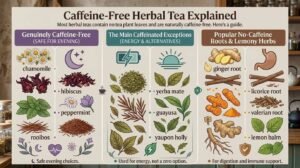
Is all herbal tea caffeine-free? Almost all herbal tea is naturally caffeine-free, since it contains no leaves from the tea plant, though a few well-known exceptions exist.
The main exceptions worth knowing:
- Yerba mate — Contains natural caffeine and is often used as a coffee alternative rather than a caffeine-free option.
- Guayusa — Also naturally caffeinated, traditionally used in parts of South America for energy.
- Yaupon — A lesser-known North American holly with natural caffeine content.
Everything else, including chamomile, peppermint, hibiscus, rooibos, ginger, and lemon balm, is genuinely caffeine-free, making them safe choices for evening drinking or for anyone cutting back on caffeine entirely.
Herbal Tea Varieties Compared by Benefit
| Herbal Tea | Plant Part | Main Benefit | Best Time to Drink | Flavor Profile |
|---|---|---|---|---|
| Chamomile | Flower | Sleep, relaxation | Evening | Mild, apple-like |
| Peppermint | Leaf | Digestion | After meals | Cooling, minty |
| Ginger | Root | Nausea, digestion | Morning or after meals | Warming, spicy |
| Hibiscus | Flower | Heart health support | Morning or iced | Tart, cranberry-like |
| Rooibos | Leaf | Antioxidants, caffeine-free base | Anytime | Sweet, nutty |
| Lemon Balm | Leaf | Daytime calm | Afternoon | Light, citrusy |
| Passionflower | Flower/Leaf | Anxiety, sleep | Evening | Earthy, grassy |
Winner: For most people just starting to explore herbal tea, chamomile and peppermint together cover the two most requested benefits, sleep and digestion, and both are widely available, mild-tasting, and forgiving for beginners.
Common Mistakes When Choosing Herbal Tea
- Choosing by flavor alone — A tea that tastes good but doesn’t match your actual goal won’t deliver the benefit you’re looking for.
- Assuming all herbal tea does the same thing — Chamomile and peppermint are both “herbal tea,” but they target completely different needs.
- Overlooking caffeine exceptions — Yerba mate and guayusa are herbal teas that do contain caffeine, which matters if you’re avoiding it for sleep.
- Buying too many blends at once — Starting with one herb per goal, as outlined in the Herbal Tea Choice Compass, is easier to evaluate than testing ten blends simultaneously.
- Ignoring medication interactions — Some herbal teas, including chamomile and hibiscus, can interact with certain medications, so check with a doctor if you take prescription drugs regularly.
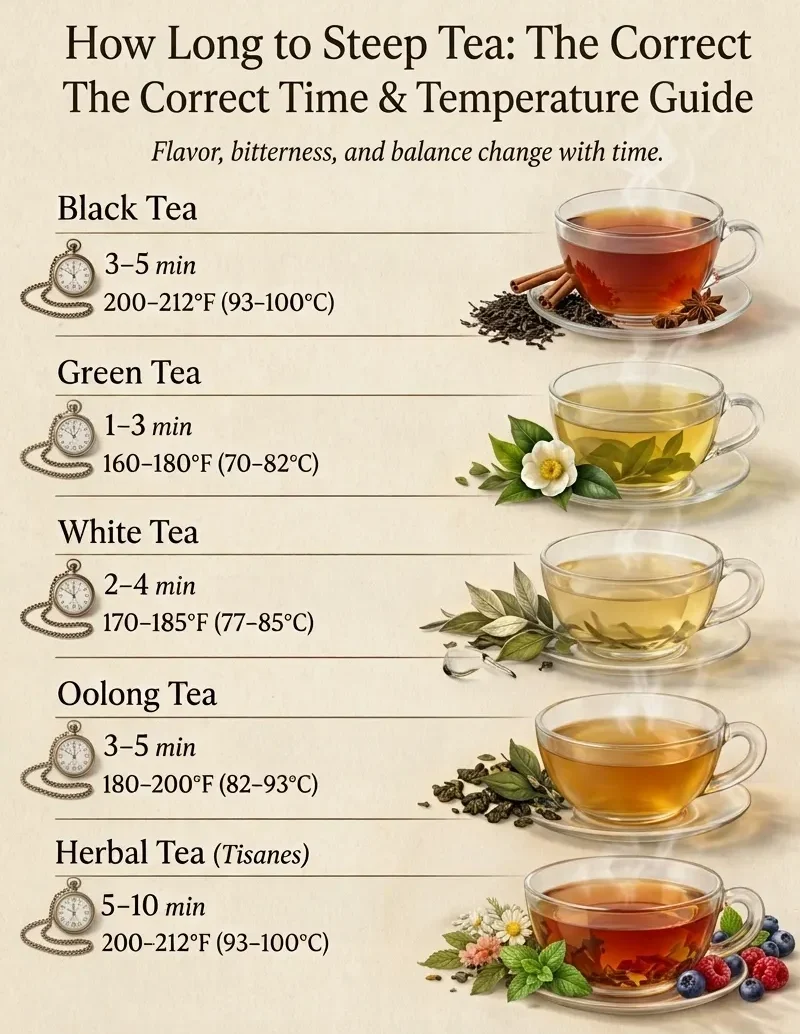
- Under-steeping — Even the right herbal tea choice underperforms if it isn’t brewed long enough to extract its active compounds.
Frequently Asked Questions
How do you choose the right herbal tea?
Start with your goal, whether that’s sleep, digestion, or simply a caffeine-free drink, and pick the herb known for that specific benefit rather than choosing by flavor first. Chamomile for sleep and peppermint for digestion are the most reliable starting points for beginners.
What are the types of herbal tea and their benefits?
Herbal tea generally falls into flower teas like chamomile and hibiscus, leaf teas like peppermint and rooibos, and root teas like ginger and licorice. Flower teas tend toward relaxation, leaf teas toward digestion or daytime calm, and root teas toward digestive and immune support.
How do I choose herbal tea based on benefits?
Match the herb to the specific outcome you want. Choose chamomile or passionflower for sleep, peppermint or ginger for digestion, hibiscus for heart health support, and rooibos as a general caffeine-free daily option.
Which herbal tea is best for sleep and relaxation?
Chamomile, valerian root, and passionflower are the most commonly recommended herbal teas for sleep and relaxation. Chamomile is the most widely studied and mildest option, making it a good starting point.
Which herbal tea is best for digestion?
Peppermint and ginger are the two most commonly recommended herbal teas for digestion. Peppermint works well for bloating after meals, while ginger is more often used for nausea.
Is herbal tea always caffeine-free?
Almost always, since it contains no leaves from the tea plant, but a few exceptions like yerba mate, guayusa, and yaupon do contain natural caffeine. Always check the label if avoiding caffeine is your specific goal.
Can you mix different types of herbal tea together?
Yes, blending herbal teas is common and often improves both flavor and effect, such as pairing chamomile with lavender for sleep or peppermint with ginger for digestion. Start with a dominant herb and add smaller amounts of a second or third herb to round out the blend.
How many types of herbal tea are there?
There are dozens of common herbal tea varieties, but most fall into three broad categories: flower teas, leaf teas, and root teas. Focusing on category first makes it much easier to choose among the dozens of individual options available.
Conclusion
Learning how to choose herbal tea really comes down to matching the plant to the purpose. Flower teas like chamomile lean toward relaxation, leaf teas like peppermint lean toward digestion, and root teas like ginger lean toward digestive and immune support. Once you know which category fits your goal, picking a specific herbal tea becomes far less overwhelming than staring at a wall of boxes in the store.
Next Steps:
- Use the Herbal Tea Choice Compass to identify your main goal before buying anything.
- Pick one tea from each plant-part category to build a simple starter collection.
- Read How to Make Herbal Tea for exact brewing steps once you’ve chosen your herbs, and Herbal Tea Benefits for the research behind each one.
Author Bio
Written by a certified herbalist and wellness writer with over 10 years of experience formulating and testing herbal tea blends for small-batch tea brands. She has taught herbal tea workshops at community wellness centers and contributed brewing guides to regional health and lifestyle publications. This article is based on a review of licensed health publications, specialty tea industry sources, and hands-on tea testing.
Sources & References
- Healthline, “10 Healthy Herbal Teas You Should Try.”
- Newby Teas, “6 Types of Herbal Tea and Their Benefits.”
- Tasting Table, “23 Types Of Herbal Teas, Explained.”
- Amazing Food & Drink, “Herbal Tea Guide: Varieties, Flavours & When to Enjoy Them.”