Ginger Tea: Benefits, Uses & How to Make It

Ginger tea has one of the strongest reputations of any herbal tea for a single benefit, easing nausea, and unlike a lot of wellness claims, this one actually holds up in clinical research. A 2024 randomized controlled trial involving 103 people undergoing chemotherapy found that daily ginger reduced how severe their nausea and vomiting felt compared to a placebo. That’s a meaningful result for something as simple as a warm cup of root and water. Ginger tea’s benefits go well beyond nausea too, covering digestion, mild inflammation, and everyday comfort, but it’s not automatically good for everyone or every stomach issue.
In this guide you’ll learn:
- The real, research-backed ginger tea health benefits for nausea and digestion
- What ginger tea is good for, beyond just an upset stomach
- How to make tea from ginger using a simple fresh ginger tea recipe
- The honest ginger tea side effects and how much you can safely drink a day
- Whether ginger tea actually helps or worsens stomach acid and heartburn
This guide is part of our full herbal tea series. If you’re still deciding which tea fits your needs, start with How to Choose Herbal Tea: Types, Benefits & Best Uses.
Key Takeaways
- Ginger tea health benefits are best documented for nausea, including pregnancy-related and chemotherapy-related nausea.
- A 2024 randomized controlled trial in 103 chemotherapy patients found that daily ginger reduced nausea severity and improved quality of life compared to a placebo.
- Ginger tea does not reliably increase stomach acid in healthy adults, though it affects people with acid reflux differently, helping some and triggering symptoms in others.
- Most sources recommend a maximum of 3 to 4 grams of fresh ginger a day for adults, and no more than 1 gram a day during pregnancy.
- Common side effects at high doses include heartburn, diarrhea, and stomach irritation.
What Is Ginger Tea?
Ginger tea is defined as an herbal infusion made by steeping or simmering fresh or dried ginger root in hot water. It’s naturally caffeine-free and has been used across many cultures for centuries to settle the stomach and ease nausea.
Ginger’s effects come mainly from gingerols and shogaols, active plant compounds that give ginger its spicy bite and are believed to be behind most of its digestive and anti-nausea effects. Fresh ginger and dried ginger both work, though fresh ginger tends to taste brighter and slightly less concentrated than dried, gram for gram.

Ginger Tea Health Benefits
What are the benefits of drinking ginger tea? The best-documented ginger tea health benefit is nausea relief, supported by clinical research in both pregnancy and chemotherapy settings, along with traditional and emerging evidence for digestion, inflammation, and immune support.
What the Research Shows
A 2024 randomized controlled trial of 103 people receiving chemotherapy found that participants taking 84 mg of ginger daily reported less severe nausea and vomiting, along with better quality of life, than those taking a placebo. For pregnancy-related nausea, a review of 12 studies covering 1,278 pregnant women found that taking less than 1,500 mg of ginger per day did not increase the risk of heartburn, miscarriage, or drowsiness, and even the American College of Obstetricians and Gynecologists lists ginger as an acceptable non-drug option for morning sickness.
Beyond nausea, Johns Hopkins Medicine notes that ginger may help reduce bloating and intestinal gas by cutting down on fermentation in the gut, and that it contains antioxidants which help manage free radicals in the body. Ginger contains over 400 natural compounds, some of which have anti-inflammatory properties, though researchers are still working out exactly how significant these effects are in typical tea-strength doses.
Pro Tip / Expert Insight: If nausea is your main reason for drinking ginger tea, consistency during the specific window you need it, like the first trimester of pregnancy or the days around a chemotherapy session, tends to matter more than drinking a large amount all at once.
What Is Ginger Tea Good For?
What is ginger tea good for? Ginger tea is most commonly used for nausea, digestion, and mild cold or flu symptoms, and it’s also a popular caffeine-free way to warm up in cold weather.
The main uses people reach for ginger tea for:
- Nausea and morning sickness — The best-studied use, particularly for pregnancy and chemotherapy-related nausea.
- Motion sickness — Commonly used before travel to help settle the stomach.
- Digestive discomfort and bloating — Ginger’s muscle-relaxing effect on the gut may ease general stomach discomfort.
- Cold and flu symptoms — Traditionally used to soothe a scratchy throat, cough, or general winter illness.
- Post-meal comfort — A warming after-dinner drink that many people find soothing, separate from any specific medical claim.
Ginger Tea and Stomach Acid
Does ginger tea increase stomach acid? No, according to a medically reviewed evidence summary, there is no strong evidence that ginger tea consistently increases stomach acid in healthy adults, though it’s also not a guaranteed remedy for heartburn and can affect people with acid reflux differently.
This is one of the more misunderstood parts of ginger tea’s reputation. Some people find that ginger tea calms their stomach and reduces burning, since it has anti-inflammatory properties associated with soothing acid reflux and heartburn in some contexts. Others find the opposite, since gingerol can irritate the stomach lining at higher doses, and strong tea, large amounts, or added ingredients like mint, lemon, or caffeine may trigger symptoms in people who are sensitive.
The honest answer is that ginger tea’s effect on stomach acid is personal rather than universal. If a cup feels soothing and doesn’t cause burning, it’s likely fine in moderation. If it regularly causes heartburn, a sour taste, or chest discomfort, it’s better treated as a personal trigger food than a universal digestive remedy.
How to Make Tea From Ginger
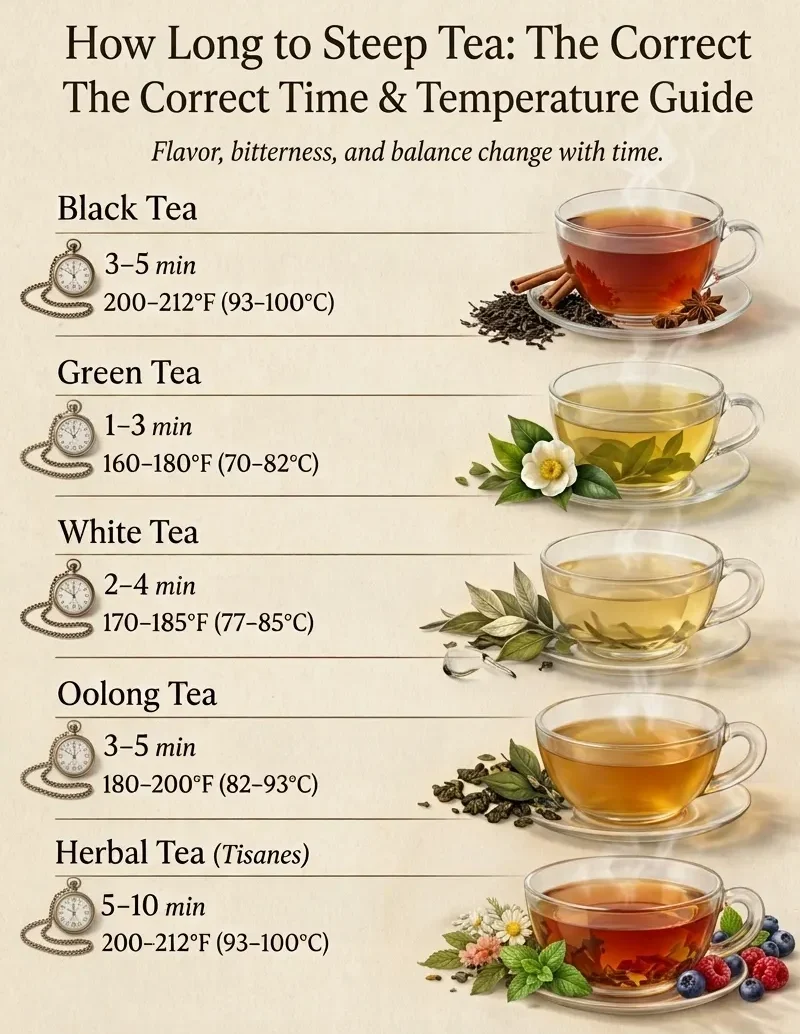
How do you make tea from ginger? The simplest way to make tea from ginger is to simmer a few slices of fresh ginger root in water for 10 to 15 minutes, then strain and drink, though dried ginger steeped like a regular tea also works well.
Step-by-Step: Basic Ginger Tea Method
- Slice fresh ginger — Use a 1-inch piece of ginger, sliced thin, or 1 teaspoon of dried ginger per cup.
- Add ginger to water — Place the slices directly into a pot of water rather than pouring water over them, since ginger benefits from a longer simmer.
- Bring to a boil, then simmer — Simmer for 10 to 15 minutes for a stronger cup, or steep in just-off-boil water for 5 to 8 minutes for a milder one.
- Strain into a cup using a tea infuser or fine mesh strainer.
- Add lemon or honey, if desired, once the tea is strained.
Fresh Ginger Tea Recipe
Here’s a simple fresh ginger tea recipe that makes about 2 servings:
Ingredients:
- 1 to 2 inches fresh ginger root, thinly sliced
- 2 cups water
- Honey and lemon, to taste (optional)
Instructions:
- Add sliced ginger and water to a small pot.
- Bring to a boil, then reduce heat and simmer for 10 to 15 minutes.
- Strain into cups, discarding the ginger slices or saving them for a second, milder batch.
- Stir in honey and a squeeze of lemon if desired, and serve hot.

This method produces a noticeably stronger cup than simply steeping ginger the way you would a tea bag, since simmering pulls more of the gingerol content out of the fibrous root.
Best Time to Drink Ginger Tea
What is the best time to drink ginger tea? Ginger tea works well in the morning for general digestion and energy, or after meals to ease bloating, though anyone using it specifically for nausea should drink it whenever the nausea tends to occur rather than sticking to a fixed time.
For pregnancy-related morning sickness, many people find sipping ginger tea shortly after waking helps more than waiting until nausea is already strong. For general digestive comfort, drinking it 20 to 30 minutes after a heavy meal is the more common approach.
Ginger Tea Side Effects & How Much Is Safe
What are the side effects of ginger tea, and how much can you drink a day? Ginger tea is generally safe when consumed in normal amounts, but higher doses can cause heartburn, diarrhea, and stomach irritation, and most sources recommend no more than 3 to 4 grams of fresh ginger a day for adults.
Daily Limits Worth Knowing
- General adults: Up to 3 to 4 grams of fresh ginger per day, roughly a 6 to 7 millimeter thick slice.
- Pregnant women: No more than 1 gram of ginger extract per day, and pregnant women should avoid ginger close to labor due to its effect on bleeding.
- Children under 2: Ginger tea is generally not advised for children younger than two years old.
- People on blood thinners: Ginger may interact with blood-thinning medication, though the evidence on how significant this interaction is remains mixed, so caution and a conversation with a doctor are recommended.
- People with gallbladder disease: Large doses of ginger may increase bile flow, which isn’t recommended if you have gallbladder disease.
The Ginger Comfort Zone Framework™
This is an original framework created for this guide to simplify ginger tea dosing into one easy mental model: think of ginger intake as three zones. The green zone is 1 to 2 cups of normal-strength ginger tea a day, which is where most people comfortably sit with minimal risk. The yellow zone is 3 to 4 cups or a stronger simmered brew, where mild side effects like heartburn become more likely in sensitive individuals. The red zone is anything beyond that, or any amount at all during pregnancy without medical guidance, where the risk of digestive upset or interaction concerns rises meaningfully.
Pro Tip: If you’ve never tried ginger tea before, start in the green zone with a mild, briefly steeped cup rather than a strong, long-simmered one, so you can see how your own stomach reacts before increasing strength or frequency.
Frequently Asked Questions
What are the benefits of drinking ginger tea?
The best-documented benefit of ginger tea is nausea relief, supported by clinical research in both pregnancy and chemotherapy settings. It’s also commonly used for digestion, bloating, and mild cold symptoms.
What is ginger tea good for?
Ginger tea is most often used for nausea, motion sickness, digestive discomfort, and general cold or flu comfort. It’s also a popular caffeine-free warming drink, separate from any specific medical use.
How do you make tea from ginger?
Simmer thin slices of fresh ginger root in water for 10 to 15 minutes, then strain and drink. Dried ginger can also be steeped like a regular tea for 5 to 8 minutes if you prefer a milder cup.
Best time to drink ginger tea?
Morning works well for general digestion or pregnancy-related nausea, while after meals is the more common choice for bloating and post-meal comfort. There’s no strict rule, so timing should match the reason you’re drinking it.
How much ginger tea can you drink a day?
Most sources recommend no more than 3 to 4 grams of fresh ginger a day for healthy adults, and no more than 1 gram a day during pregnancy. Going beyond this increases the risk of heartburn and stomach irritation.
Does ginger tea cause stomach acid or heartburn?
There is no strong evidence that ginger tea consistently increases stomach acid in healthy adults, but it affects people with acid reflux differently. Some people find it soothing, while others find it triggers heartburn, especially at higher doses.
Can pregnant women drink ginger tea?
Yes, ginger is considered an acceptable non-drug option for pregnancy-related nausea by organizations like the American College of Obstetricians and Gynecologists, generally up to 1 gram of ginger extract per day. Pregnant women should avoid higher doses and check with a doctor, especially close to labor.
What are the side effects of ginger tea?
Common side effects at higher doses include heartburn, diarrhea, and stomach irritation. Ginger may also interact with blood-thinning medication, so people on those medications should talk to a doctor before drinking it regularly.
Conclusion
Ginger tea has one of the more solid research backings among herbal teas, particularly for nausea, and it’s simple enough to make at home with nothing more than fresh root and hot water. That said, more isn’t automatically better. Staying within the 3 to 4 gram daily range for most adults, being far more cautious during pregnancy, and paying attention to your own stomach’s reaction to acid are what separate a genuinely helpful daily habit from one that causes more discomfort than it solves.
Next Steps:
- Try the fresh ginger tea recipe above and note how your stomach responds before increasing strength or frequency.
- If you’re pregnant or on blood-thinning medication, check the safe daily amounts above and talk to a doctor before making it a daily habit.
- Explore other options in our guide, How to Choose Herbal Tea: Types, Benefits & Best Uses, if you’re building out a full herbal tea routine.
Author Bio
Written by a certified herbalist and wellness writer with over 10 years of experience formulating and testing herbal tea blends for small-batch tea brands. She has taught herbal tea workshops at community wellness centers and contributed brewing guides to regional health and lifestyle publications. This article is based on a review of peer-reviewed clinical research and licensed health publications including Johns Hopkins Medicine and Healthline.
Sources & References
- Johns Hopkins Medicine, “Ginger Benefits.”
- MedicalNewsToday, “Ginger tea side effects: What are the risks and benefits?”
- Healthline, “Ginger for Nausea: Does It Work?”
- Acıbadem International, “Ginger Tea and Stomach Acid: What Evidence Shows.”
- Healthline, “Benefits of Ginger Tea.“



Post Comment