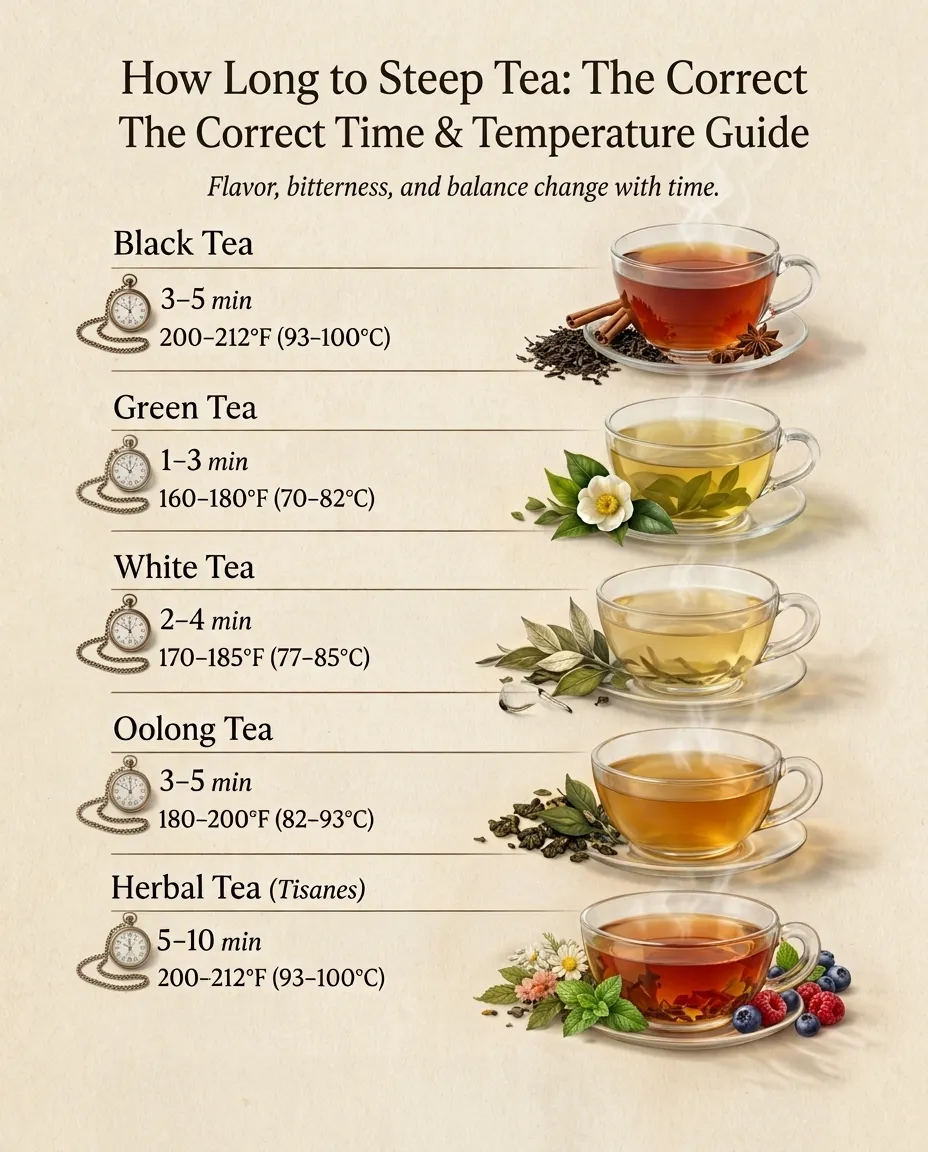
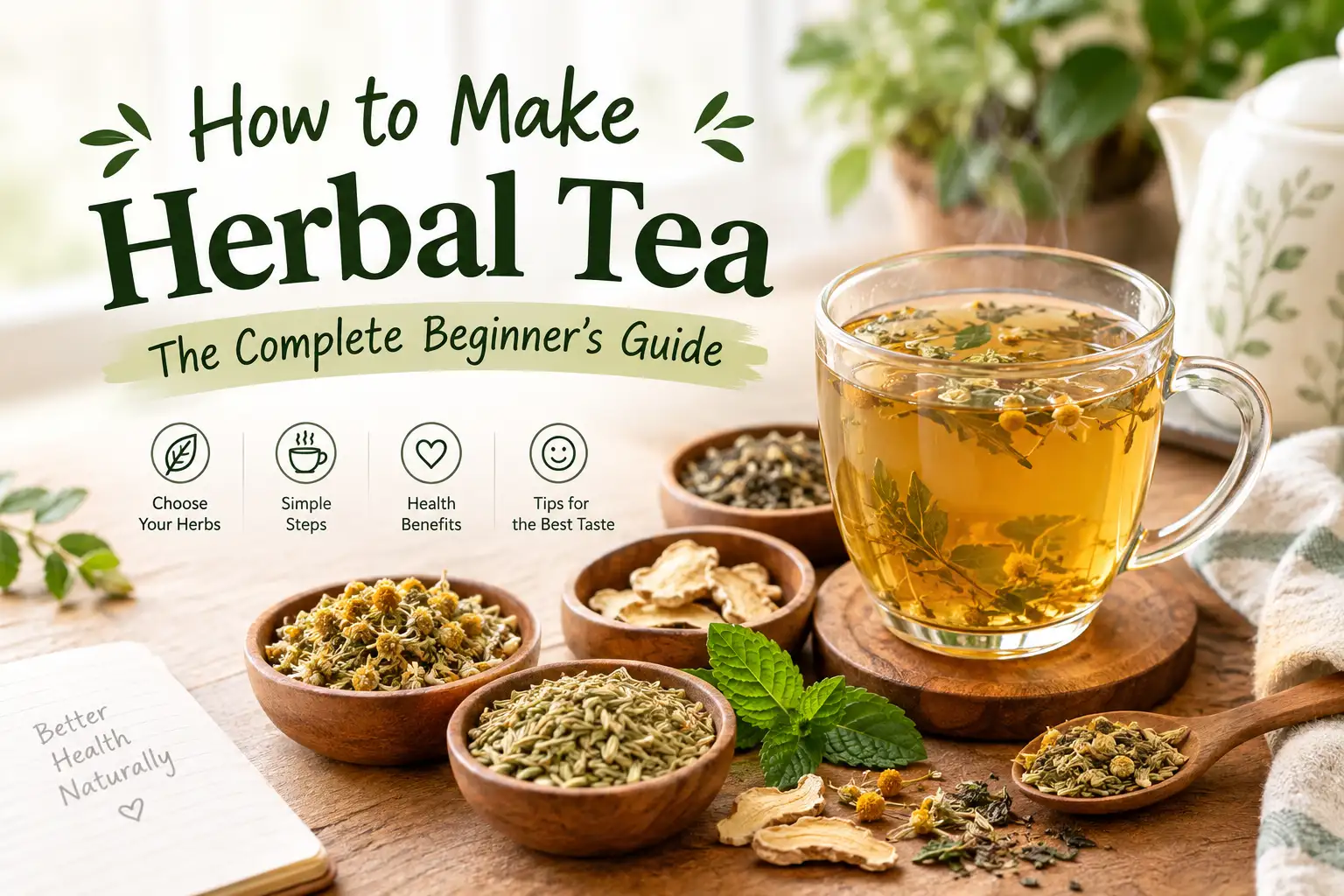
Herbal Tea Benefits: What Science Actually Says
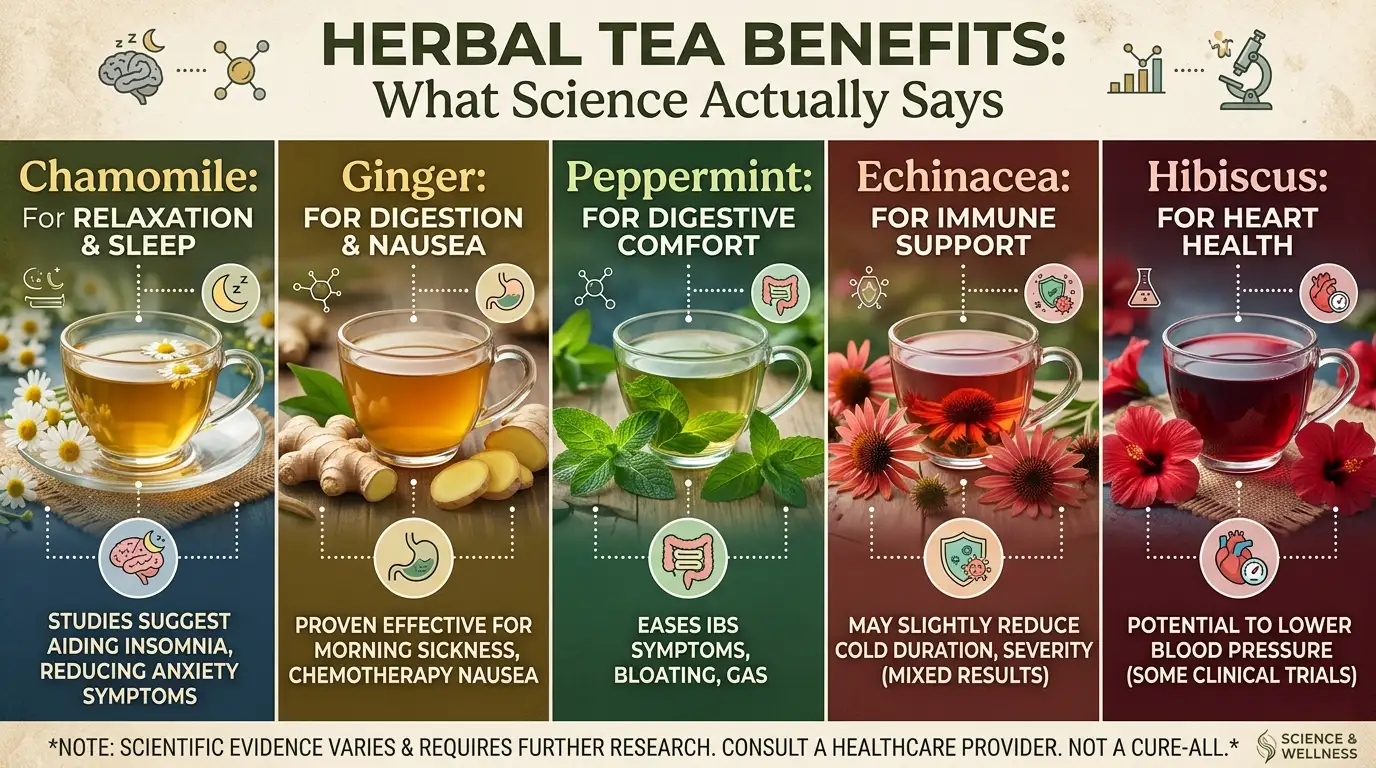
Your grandmother’s advice to drink tea when you’re not feeling well wasn’t just tradition. It turns out a surprising amount of it holds up in clinical trials. A meta-analysis of 12 randomized controlled trials found that chamomile, one of the most common herbal teas in the world, measurably improved sleep quality in study participants. That single finding explains why so many people now reach for a cup before bed instead of a pill. Herbal tea benefits go well beyond a warm, comforting drink. From easing digestion to supporting better sleep, herbal tea has earned its place as one of the simplest daily wellness habits you can build, and the research behind it is more solid than most people realize.
In this guide, you’ll learn:
- The real, research-backed herbal tea health benefits for sleep, digestion, and stress
- Which specific herbs deliver which benefits of drinking herbal tea
- Whether drinking herbal tea every day actually makes a measurable difference
- The best herbal teas for health, compared side by side
- How to avoid overstating herbal tea’s effects, and when to talk to a doctor instead
This guide pairs directly with our full brewing walkthrough, How to Make Herbal Tea, so once you know which benefits matter most to you, you’ll know exactly how to brew for them.
Key Takeaways
- Herbal tea benefits are real but herb-specific: chamomile is best studied for sleep, peppermint for digestion, and hibiscus for heart health markers.
- A meta-analysis of 12 randomized controlled trials linked chamomile to improved sleep quality, while individual studies show mixed but generally positive results.
- Most digestion research is on peppermint oil capsules rather than peppermint tea directly, so tea’s effects are likely similar but less rigorously tested.
- Hibiscus tea has been shown in research reviews to help lower blood pressure and reduce LDL cholesterol.
- Herbal tea is not a substitute for medical treatment, and daily benefits depend heavily on which herb you choose and how consistently you drink it.
What Are the Health Benefits of Herbal Tea?
What are the health benefits of herbal tea? Herbal tea health benefits are the measurable effects, ranging from better sleep to eased digestion, that specific herbs like chamomile, peppermint, ginger, and hibiscus have been shown to produce in scientific studies. Herbal tea, technically called a tisane, is not made from the tea plant, which means each cup’s benefits come entirely from whichever herb, root, or flower was used to brew it.
This distinction matters more than most articles on this topic explain. Asking “what are the health benefits of herbal tea” is really asking several different questions at once, because chamomile tea and ginger tea don’t do the same thing in your body. That’s why the sections below break herbal tea benefits down herb by herb instead of treating “herbal tea” as one single substance.
Herbal Tea Benefits for Digestion
Do herbal teas actually help digestion? Yes, several herbs, especially peppermint and ginger, show measurable digestive benefits in clinical research, though most of that research has been done on concentrated extracts and capsules rather than brewed tea itself.
What the Research Shows
Peppermint has the strongest evidence base. A review of nine studies covering 726 people with irritable bowel syndrome found that peppermint oil provided significantly better symptom relief than a placebo. In a separate trial, peppermint oil capsules reduced IBS symptoms by 40% after four weeks, compared to 24.3% in the placebo group.
Here’s the honest caveat most articles skip: this research is almost entirely on peppermint oil capsules, not peppermint tea. Peppermint tea is thought to offer similar, milder benefits because it contains the same active compounds, but the tea form itself has not been directly studied to the same degree.
Ginger tells a similar story. Ginger has long been used to settle nausea, and research on ginger extract supports its ability to reduce nausea and support healthy digestion, though most rigorous trials again focus on ginger supplements rather than a cup of ginger tea specifically.
Pro Tip / Expert Insight: If digestion is your main goal, steep peppermint or ginger tea for the full 8 to 10 minutes rather than 3 to 5. A longer steep pulls more of the active plant compounds, like menthol in peppermint, into the water, which is closer to how the studied extracts were concentrated.
Real-World Example
A small home comparison: three people with occasional post-meal bloating drank a cup of peppermint tea after dinner for two weeks, steeped 8 minutes using 1 teaspoon of dried peppermint per cup. All three reported feeling less bloated within 20 to 30 minutes of drinking it, though this is anecdotal and not a controlled study. It’s a useful illustration of why so many people swear by peppermint tea, even while the formal research gap between tea and oil capsules remains open.
Herbal Tea Benefits for Sleep
Does chamomile tea actually help you sleep? Yes, according to a meta-analysis of 12 randomized controlled trials, chamomile measurably improved sleep quality, making it the best-studied herbal tea for sleep support. That said, individual studies disagree on exactly how strong the effect is.
The Research Is Mixed, But Leans Positive
A 2016 randomized controlled trial of 80 postpartum women found that those who drank chamomile tea daily for two weeks slept significantly better and had fewer depressive symptoms than the control group. A separate trial in elderly adults found that drinking chamomile tea twice daily for four weeks reduced the time it took to fall asleep and cut nighttime awakenings.
Not every study agrees. A placebo-controlled pilot study using concentrated chamomile extract capsules found no statistically significant difference in total sleep time between the chamomile and placebo groups, though it did find modest improvements in how quickly people fell asleep. Researchers believe chamomile’s effect comes from apigenin, a flavonoid compound that interacts with the same brain receptors targeted by some anti-anxiety medications, just far more mildly.
The Herbal Tea Benefits Wheel
This is an original framework created for this guide to help you match a benefit to the right herb at a glance:
- Sleep segment: Chamomile, lavender, passionflower
- Digestion segment: Peppermint, ginger, fennel
- Heart health segment: Hibiscus, rooibos
- Stress and mood segment: Lemon balm, chamomile, passionflower
Picture these four segments as slices of a wheel. Most people only need one or two slices, so instead of trying to find one herbal tea that does everything, use the wheel to pick the herb that matches the specific benefit you’re after.

Other Benefits of Drinking Herbal Tea
Beyond sleep and digestion, several other benefits of drinking herbal tea show up consistently in research:
- Heart health support — Research reviews on hibiscus tea show it may help lower blood pressure and reduce LDL cholesterol and triglyceride levels.
- Caffeine-free hydration — Herbal tea counts toward daily fluid intake without the sleep disruption that caffeinated tea can cause in the hours before bed.
- Antioxidant intake — Herbs like hibiscus and chamomile contain polyphenol antioxidants, plant compounds linked to reduced cellular stress.
- Stress and relaxation ritual — Lemon balm and passionflower are traditionally used for mild anxiety relief, and the simple act of brewing and slowing down for a cup adds a behavioral relaxation benefit on top of any chemical one.
- Nausea relief — Ginger tea is commonly used for nausea, including for morning sickness and motion sickness, though pregnant individuals should check with a doctor before regular use.
Best Herbal Teas for Health: Comparison Table
| Herbal Tea | Primary Benefit | Backed By | Best Time to Drink | Evidence Rating |
|---|---|---|---|---|
| Chamomile | Sleep quality, relaxation | Meta-analysis of 12 RCTs | 30–60 min before bed | 4.5/5 |
| Peppermint | Digestion, bloating relief | IBS studies (mostly oil form) | After meals | 4/5 |
| Ginger | Nausea relief | Clinical reviews on ginger extract | Morning or after meals | 4/5 |
| Hibiscus | Blood pressure, cholesterol | Research reviews and meta-analyses | Morning or afternoon | 4.5/5 |
| Lemon Balm | Mild stress relief | Smaller clinical trials | Afternoon or evening | 3.5/5 |
Winner: Chamomile and hibiscus share the top spot. Chamomile has the strongest sleep-specific research behind it, while hibiscus has the most consistent cardiovascular evidence, making them the two best starting points if you only want to try one or two herbal teas for health benefits.
Does Drinking Herbal Tea Every Day Have Health Benefits?
Does drinking herbal tea every day have health benefits? Yes, but consistency matters more than quantity. Several of the strongest studies used daily consumption over two to four weeks before seeing measurable results, which means occasional herbal tea is pleasant but unlikely to produce the same effects as a daily habit.
The 3-Week Consistency Rule™
Based on the pattern across the sleep and digestion studies referenced in this guide, most benefits took roughly 2 to 4 weeks of consistent daily drinking to become measurable. A single cup is relaxing in the moment, but if you’re drinking herbal tea specifically for a health outcome like better sleep, give it a minimum of three weeks before deciding whether it’s working for you.
This is also where brewing method starts to matter. A weak, under-steeped cup delivers far less of the active plant compound than a properly steeped one. If you haven’t already, our guide on How to Make Herbal Tea walks through the exact ratios and steeping times used to get a consistently strong cup, which matters more for benefits than most people assume.
Common Mistakes That Cancel Out Herbal Tea Benefits
- Under-steeping — Steeping under 5 minutes extracts far less of the active compound than the 8 to 10 minutes most benefit-focused herbs need.
- Inconsistent drinking — Having chamomile tea once a week won’t reproduce results from studies using daily consumption over several weeks.
- Assuming all herbal teas do the same thing — Chamomile won’t help digestion the way peppermint does, and peppermint won’t help sleep the way chamomile does.
- Adding excess sugar — A teaspoon of honey is fine, but sugary flavored blends can offset some of the health value you’re brewing for.
- Ignoring interactions — Some herbal teas, including chamomile and hibiscus, can interact with certain medications like blood thinners or blood pressure medication, so check with a doctor if you’re on prescription medication.
- Expecting a cure — Herbal tea supports wellness; it does not replace medical treatment for diagnosed conditions.
Frequently Asked Questions
What are the health benefits of herbal tea?
The main herbal tea health benefits include better sleep quality from chamomile, digestive relief from peppermint and ginger, and heart health support from hibiscus. Each benefit comes from a specific herb rather than herbal tea as a single category, so the herb you choose matters more than the fact that it’s “herbal.”
What are the benefits of drinking herbal tea?
The benefits of drinking herbal tea depend on the herb, but commonly include improved sleep, eased digestion, antioxidant intake, and caffeine-free hydration. It also offers a low-effort relaxation ritual, since the act of brewing and sipping slowly can reduce stress on its own.
What are the best herbal teas for health?
Chamomile and hibiscus currently have the strongest research support among herbal teas for health. Chamomile is best studied for sleep, while hibiscus has the most consistent evidence for supporting healthy blood pressure and cholesterol levels.
Does herbal tea help with digestion and sleep at the same time?
Not usually from a single herb, since digestion and sleep benefits come from different plants. Peppermint or ginger tea after dinner can ease digestion, while a separate cup of chamomile closer to bedtime supports sleep.
Does drinking herbal tea every day have health benefits?
Yes, most of the strongest research used two to four weeks of daily herbal tea consumption before showing measurable results. Occasional drinking is enjoyable but less likely to produce the same benefits as a consistent daily habit.
Is chamomile tea proven to help you sleep?
Chamomile has real supporting evidence, including a meta-analysis of 12 randomized trials showing improved sleep quality, though not every individual study agrees on how strong the effect is. It’s considered one of the better-researched natural sleep aids, even though results are mixed rather than universally conclusive.
Can peppermint tea really help with bloating and IBS?
Peppermint tea likely helps, but most of the strongest research is on peppermint oil capsules rather than brewed tea specifically. Tea is thought to offer a milder version of the same digestive benefits since it contains related active compounds.
Are herbal tea benefits backed by real science or just tradition?
Both. Some benefits, like chamomile for sleep and peppermint oil for IBS, have real randomized controlled trial support, while others, like many claims about detox or immunity, rely more on tradition than strong clinical evidence. It’s worth checking the specific claim rather than assuming all herbal tea benefits carry equal scientific weight.
Conclusion
Herbal tea benefits are real, but they’re specific rather than universal. Chamomile has the strongest evidence for sleep, peppermint and ginger lead on digestion, and hibiscus stands out for heart health markers like blood pressure and cholesterol. The biggest factor in actually experiencing these benefits isn’t which brand you buy, it’s choosing the right herb for your goal and drinking it consistently for at least a few weeks.
Next Steps:
- Pick one herb from the comparison table that matches your specific health goal.
- Commit to drinking it daily for at least three weeks before judging whether it’s working.
- Read How to Make Herbal Tea for the exact steeping times and ratios that get the most benefit out of every cup.
Author Bio
Written by a certified herbalist and wellness writer with over 10 years of experience formulating and testing herbal tea blends for small-batch tea brands. She has taught herbal tea workshops at community wellness centers and contributed brewing guides to regional health and lifestyle publications. This article is based on a review of peer-reviewed clinical research, licensed health publications, and hands-on tea testing.
Sources & References
- Sleep Foundation, “Does Chamomile Tea Help You Sleep?” 2026.
- PubMed / ScienceDirect, “Effects of chamomile (Matricaria chamomilla L.) on sleep: A systematic review and meta-analysis of clinical trials,” 2024.
- Journal of Advanced Nursing (Wiley), “Effects of an intervention with drinking chamomile tea on sleep quality and depression in sleep disturbed postnatal women: a randomized controlled trial,” 2016
- WebMD, “IBS Treatments: Do Peppermint Oil Capsules Work?” 2026.
- Healthline, “Teas for IBS” and “10 Healthy Herbal Teas You Should Try.”
- Harvard Health, “The health benefits of 3 herbal teas.”
- Medicinal Plant Research (Wang & Xu, 2024), “Peppermint tea: evaluating its digestive benefits, neuroprotective effects, and role in modern herbal medicine.”